
Executive lounges with happy hours, complimentary hors d'oeuvres, and complimentary services have been the norm - but not anymore.
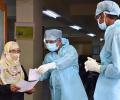
'Call it by whichever name, but there is transmission happening between people.'
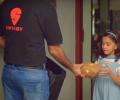
Given that people have been reluctant to order cooked food - which worsened due to a couple of cases of delivery personnel testing positive for COVID-19 - food delivery platforms have included grocery delivery as part of their services.
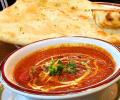
What India's top restaurants are doing to satisfy your food cravings.
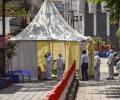
Inside the narrow alleys of the basti, two CRPF companies -- around 150 armed guards -- have been deployed to keep a check on any unnecessary movement, reports Ruchika Chitravanshi.
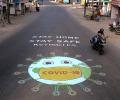
410 civil servants in a feedback survey to the Prime Minister's Office said that the curfew should stay till the pandemic is controlled and asked to increase fiscal spending on health infrastructure to around Rs 5-10 trillion.

Once the 21-day lockdown is lifted, which may happen in phases, those who have been contemplating purchasing a car may actually do it, said analysts. Thanks to social distancing norms and rising hygiene awareness, daily commuters may ditch public transport and shared mobility solutions like Ola and Uber. Many are likely to prefer the confines of a car over roughing it up in crowded public transport services such as a metro, local sub-urban trains and buses, they said.
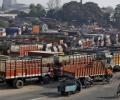
The possibility of harassment by cops and fear of the unknown have forced a large number of truck drivers to abandon vehicles at the transport centres and flee home. Transport of goods remains badly hit as confusion remains among various stakeholders and road transport becomes the victim of disconnect between policy makers and local authorities.
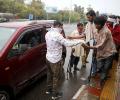
From offering office premises that can be converted into isolation wards to earmarking funds to be used for procuring kits, ventilators as well as personal protective equipment for health care workers, India Inc has put a united front to combat the unprecedented crisis facing the country.
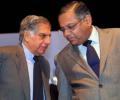
The donation by Tata Sons and Trusts is the biggest sum committed by a corporate and its philanthropic arm since the outbreak of Covid-19. Others, including Reliance Foundation, Mahindra Group, Bajaj Group, and ITC, are lending support too in the battle against the pandemic.

The business will also see a change of guard. Shailesh Chandra, president of EV and corporate strategy, will replace Mayank Pareek as president of PV business, including EV, with effect from April 1. Pareek will be superannuating from the company after a six-year stint at the end of February 2021. Chandra and Pareek will work on transition over the next few weeks.

Some 500,000 drivers and helpers have been left high and dry because of lockdown; many of these trucks are carrying essential goods.

The government is drawing up a relief package for industry with steps such as relaxation of asset-classification norms by banks, thus allowing companies to delay the repayment of loans, and tax holidays for the worst-hit sectors like aviation and hospitality. But it might not be enough to stop more bankruptcies from getting filed.

Companies will have to follow all requirements laid out under rules for holding board meetings via video conferencing such as recording of these proceedings, ensuring availability of proper equipment among others.
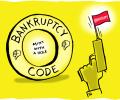
The government is also planning to set up specialised Benches for competition law to reduce the burden of the appellate tribunal, which is referred to on all matters from company law and IBC to competition law and the national financial reporting authority.
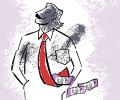
With auditing under the scanner and two of the Big Four firms stopping non-audit services for audit clients, auditors will now be subjected to a more stringent standard of reporting.

The new web form would facilitate on-screen filing and real time data validation for seamless incorporation.

Deloitte India would not provide non-audit services to all listed companies and other entities where public money is involved such as banks and insurance companies, if they are its audit clients.

After years of giving free passes to counterparts from Korea, Japan, US in the Indian auto market, Chinese automakers had planned a major push to grab the fifth largest car market in the world. But the shutdown of factories and logistics hubs in the country following the outbreak of coronavirus is slowly constricting the business of Chinese auto majors which have recently entered India.

The number of participating automakers has fallen from 50 in 2018 to 30 this year. The count of exhibitors, including technology companies, has come down from 119 to 112. And showstopper luxury and supercar brands, including Toyota, Jeep, Lamborghini, Porsche, and Volvo will be missing. Similarly, the commercial vehicle makers also gave the show a miss -- a prolonged economic slowdown has dented their fortunes and near chances of any recovery.
 © 2026 Rediff.com - Investor Information - Advertise with us - Disclaimer - Privacy Policy - Sitemap - Feedback - About us - Terms of use - Grievances